



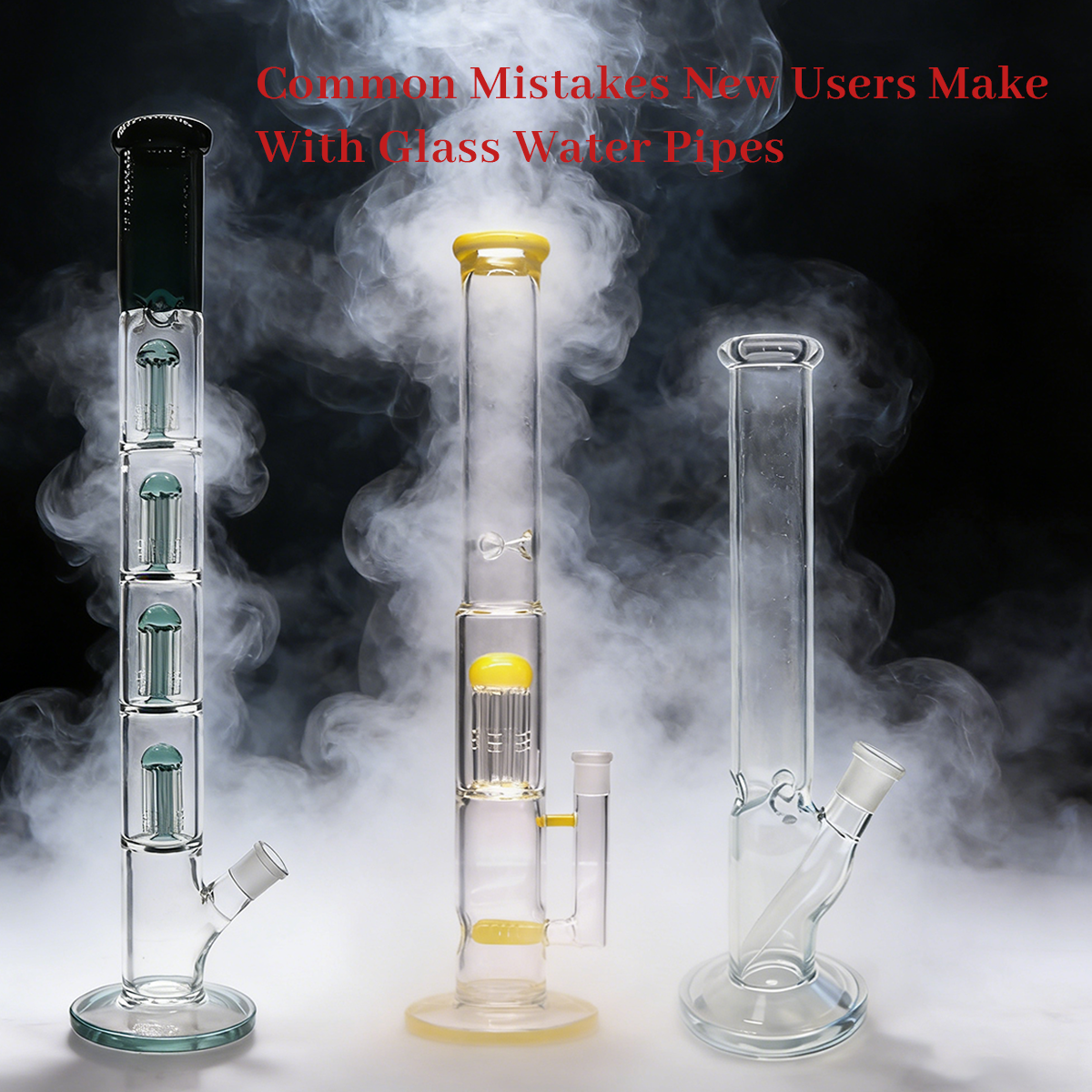









There are few worse feelings in the world of glass than that sound. The slow-motion topple, the sharp crack, the moment of silence before the reality sets in. A broken bong isn’t just a financial hit — for anyone who chose their piece carefully, it’s genuinely gutting.
The frustrating truth is that most broken bongs didn’t have to break. The majority of breakages are caused by the same handful of preventable situations: leaving a piece in a bad spot, handling it carelessly during cleaning, passing it the wrong way, or simply buying glass that wasn’t thick enough to survive daily life.
This guide covers the 10 most common causes of bong breakage and exactly what to do about each one — including how your choice of glass, thickness, and design affects how much forgiveness your piece has built in before you even pick it up.
1. Leaving It Out in a High-Traffic Area
This is the number one cause of broken bongs — and it’s almost never the owner’s fault directly. You set your piece down after a session, you get distracted, and an hour later someone clips it with an elbow, a pet sends it flying, or it simply gets knocked during a moment nobody was paying attention to.
The fix: Establish a dedicated spot for your piece that’s away from table edges, walking paths, and anywhere pets or children can reach. A low shelf, a corner of a desk, or a designated cupboard all work. The specific location matters less than the consistency — put it in the same spot every time, and it becomes muscle memory.
The other half of this habit: put it away after every session. Don’t leave it sitting out until the next time you want it. The risk window closes the moment it’s in its spot.
2. A Base That’s Too Narrow for the Surface
Narrow-based bongs — particularly straight tubes — are beautiful but physically unstable. A 2mm wobble on an uneven surface is all it takes. Put a tall straight tube on a slightly tilted coffee table and it’s already leaning toward disaster.
The fix: Choose your surface carefully. Flat, stable, and non-slippery is the standard. If you’re using a piece with a narrower base on a surface you’re not confident in, a silicone mat underneath adds friction and absorbs vibration. Better still, choose a piece with a wide, stable base.
The beaker base on Zong® pieces is specifically wider and lower-set than most competitors’ designs, giving each piece a substantially lower centre of gravity with its wide beaker stance — is considerably more stable on a surface than a standard straight tube of comparable height. takes this further with a large-diameter beaker base that’s difficult to tip under normal conditions.
3. Thin Glass That Can’t Handle Daily Life
Not all glass is equal. An entry-level bong with 3mm or 4mm walls has very little margin for error — a firm knock against a hard surface, a slip during cleaning, or a slightly rough landing after a pass can be enough to crack or shatter it.
The fix: Invest in thicker glass from the start. The difference in price between a thin-walled piece and a quality thick-walled piece is almost always less than the cost of replacing a broken one.
Every standard Zong® piece is made with 5mm Schott borosilicate glass walls — already thicker than most competitors at this price point. For smokers who want genuine daily-driver durability, the 9mm Thick and Worked Color 9mm are built at nearly twice that wall thickness using the same premium German Schott borosilicate glass. Pieces at this thickness can absorb impacts that would shatter thinner glass without flinching. If you’ve broken more than one piece in the past, stepping up to 9mm isn’t a luxury — it’s the practical decision.
The Schott borosilicate glass used in every matters specifically for thermal resistance. Cheap soda-lime glass is far more susceptible to stress fractures from temperature changes — going from cold to hot during a session, or from warm cleaning water to a cold rinse. Borosilicate handles these transitions far better, which is a meaningful durability advantage across thousands of sessions.
4. Dropping It During Cleaning
Cleaning is the moment most smokers are least cautious with their glass — and statistically one of the most common times breakage happens. Wet glass is slippery. Isopropyl alcohol makes glass even more so. And during a cleaning shake, you’re deliberately handling the piece dynamically rather than holding it still.
The fix: Clean over a soft surface. A folded towel in the sink, a rubber mat, or even cleaning over carpet all dramatically reduce the consequences of a slip. Dry your hands before picking up your piece. And when shaking, grip deliberately from two points — the base and the neck — rather than one-handed.
the Z-shaped kinks in the neck are actually natural grip points during cleaning. Rather than shaking a smooth straight tube that wants to slide out of your hand, the bends give you something to hold onto.
5. Clinking the Bowl or Downstem During Removal
The bowl and downstem are the most frequently removed parts of any bong — which makes them the most frequently broken. A careless tap against the rim of the joint, a slightly off-angle removal, or forcing a tight fit can crack either piece or chip the joint itself.
The fix: Remove the bowl and downstem with a straight pull, not a lever motion. Grip close to the joint and pull directly out rather than twisting or angling. If it’s stuck, a gentle warm water rinse around the joint loosens resin buildup without force.
Store the bowl and downstem separately when the piece isn’t in use. Leaving them inserted puts constant stress on the joint — particularly if the piece gets knocked. A zip-lock bag for accessories takes five seconds and saves the joint.
If your downstem has seen better days — chips, cracks, or a loose fit — replace it before it becomes a problem.
6. Thermal Shock — Temperature Changes That Crack Glass
Glass expands when heated and contracts when cooled. Do this too quickly — going from very hot to very cold or vice versa — and the internal stress can crack even quality glass. This is called thermal shock, and it’s more common than most smokers realize.
The most common cause: rinsing a warm bong with very cold water. Or cleaning a cold piece with very hot water. Or leaving water in a bong overnight in a cold room where it freezes slightly and expands.
The fix: Always use lukewarm water for rinsing, cleaning, and filling. Not boiling, not ice cold — lukewarm. Drain the water after every session so there’s nothing to expand or contract when temperature changes overnight.
Borosilicate glass — the Schott glass used in every — is significantly more resistant to thermal shock than standard soda-lime glass precisely because of its lower thermal expansion coefficient. It handles temperature changes better by design. But no glass is immune to extremes, so lukewarm water remains the right call regardless of your piece’s quality.
7. Passing It Wrong in a Group
Group sessions are one of the highest-risk environments for glass. More hands, less attention, more distraction, and often a lower level of familiarity with the specific piece being passed. One person’s careless grip or a mid-pass distraction is all it takes.
The fix: Pass from a secure, seated position rather than reaching across a room. Hand off the piece directly rather than setting it down mid-pass and expecting someone else to pick it up. If you’re hosting, it’s completely reasonable to brief people on how to hold your piece — grip the base with one hand and the neck with the other, don’t set it down on an edge, don’t hold it by the bowl.
8. Ash Catchers That Make the Piece Top-Heavy
An ash catcher is a great addition to any piece — it pre-filters smoke, keeps your bong cleaner for longer, and reduces cleaning frequency. But the wrong ash catcher on the wrong piece can make it significantly top-heavy, shifting the centre of gravity upward and making it easier to tip.
The fix: Choose an ash catcher matched to your piece’s size and base. A large ash catcher on a narrow-base piece is a stability problem.
9. Storing It With Accessories Still Attached
Leaving the bowl and downstem inserted during storage isn’t just a breakage risk for those accessories — it puts continuous stress on the joint, traps any remaining moisture, and means any bump to the piece has the potential to crack the joint or chip the bowl.
The fix: Always disassemble before storing. Bowl in a zip-lock bag, downstem wrapped or in the same bag, piece stored empty. It takes an extra thirty seconds and eliminates the risk entirely.
10. Buying the Wrong Piece for How You Smoke
This one doesn’t get talked about enough. A tall, thin-walled straight tube is the wrong piece for a household with pets and a hard floor. A complex multi-perc bong with delicate percolator arms is the wrong piece for someone who cleans infrequently. A small, lightweight piece is the wrong piece for someone who’s already broken several bongs through careless handling.
The fix: Buy a piece that matches your actual lifestyle, not just your aesthetic preference. If you’re clumsy, get something heavier and thicker. If you have pets or children, get a beaker base and a dedicated storage spot. If you’ve broken glass before, step up to 9mm walls.


